Tuesday, May 1

How To Start Studying Japanese?

Warning: it's not going to be a pat-on-the-head - kind of encouraging post. It's going to be very cruel kick-in-the-a**e - kind of post, but hopefully a helpful one that will save you a lot of time and struggle in the future.

So, you decided you want to study Japanese! Probably already browsing internet forums and sucking the words of wisdom from all the people who seem to be spending more time online teaching people how to study than actually study offline themselves. And you've probably already been bombarded with zillions of offers how to learn Japanese fast, how to pass JLPT in less than a week, and how to acquire kanji in your sleep while listening to some podcasts with relaxing dolphin squeaks in the background. Needless to say hard cash each. As a beginner, you're probably tempted by all these lovely hiragana charts and books that are supposedly make you a hiragana genious in no time, using just some quirky flashy pictures, special mnemonic techniques and aromatherapy. 

The thing is: it's all a waste of time and money, as the best online resources are always free. The best resources are mostly made by people who, having received a lot of goodness throughout their study, want to share a bit of the good language karma. Of course, they wouldn't be offended by a little donation here and there, but it would never be their idea to squeeze money out of a penniless teenager who wants to learn some kana to impress their peers.

Want a piece of advice on how to start studying Japanese? Firstly, it's very important to decide the following: do you want to LEARN Japanese, or just STUDY it? It might seem the same, but there is a crucial difference in between. 

Are you just trying to impress everybody for whom Spanish is a quintessence of their foreign language acquisition? There are many other languages using characters, take Chinese as an obvious example, then Hindi, or even Arabic. Studying them you're far better off for the future, too, than studying fairly useless Japanese. (Do you know the state of Japanese economy now? It's head over heels with debt.) [Off the record: I personally regret that I haven't studied Chinese on the way, as each day proves my Japanese to be useless by this ungrateful nation. If I had studied Chinese, I would have had a serious economical advantage in the least. I'll try to get some intense classes in Chinese during my last year when I come back to London.]

Then, are you just trying to prove yourself something? Teachers always told you you suck at foreign languages, and you want to prove otherwise? Or maybe Spanish never looked much diferent from French, and you hope a weird language would make a difference? Well, the sad fact is that not everybody was granted a talent in the language field. And although it is possible to force the language acquisition by repetitive study, it'll sooner or later become a chore rather than pleasure. Do you really have that much time to waste, proving something? Isn't it better to go and excel in the field that you really rule at?

And thirdly, if you're not a visual person, there is no point at even starting studying the language that requires some form of artistic sensitivity and visual memory, at least the ability to tell the characters apart. There are so many other oriental languages, some of them don't even use weird characters. Ever heard of Indonesian or Vietnamese? Even if they do, a lot of them use the limited amount of them forming words, just the way we use our alphabet (just have a look at Tibetan or previously mentioned Arabic). Why chosing Japanese, which not only uses 2 forms of syllabary, but also uses a lot of pictographic kanji, and these kanji are not even read in the same way each time! Although mostly carrying two or three, some of them can carry up to ten different readings,  depending on the word they compose.

Still sure you want to study Japanese?

If so, SIT ON YOUR FOUR LETTERS AND START STUDYING. Check the hiragana/ katakana charts online, check the stroke orders (click the characters, it will re-direct you to the webpage with animated kana). Learn kana first, old-school way, by copying thoughtfully and learning the pronunciation, and do it in less than a week (ideally during the weekend). Practice whenever you can on whichever piece of paper. Ask somebody to test you randomly. Then, after a week of doing so, go to the proper bookstore and get yourself a good handbook, with absolutely NO romaji in it. I first studied from Minna-no Nihongo with Grammar and Translation notes in English, and never really regreted it, even if the vocabulary or some problems were a bit dated. Go through your first book properly but quickly, try to cover one chapter a week. Do all the homeworks, listen to all the CDs, and learn all the kanji you encounter by memorizing WORDS, not just kanji. Check words in a good online dictionary like the excellent tangorin.com, use the Japanese input wherever possible and hide the romaji from your dictionary (in tangorin - tick the box on the right 'display readings in kana' to hide the distracting romaji). It really is as simple as that. You don't need super books or special techniques. You don't need any gadgets. You just need to sit down and study. Ingenious, eh?

Maybe my words of wisdom will spare you a lot of time and a lot of money. Or maybe not and you'll try to convince me that without some must-have gadget it is simply impossible to learn Japanese. But the harsh truth is: you really don't need any weird equipment, special pens, even more special notebooks, or, God forbid! the electronic dictionary in the very beginning of your study, in order to study Japanese. You don't even need hundreds of books, not when you're just starting, anyway. 

The cruel fact is that if you need 8 weeks to master hiragana or some riddiculous piece of software like romaji to kana converter, better go and find yourself some other language to study, as there is absolutely no way you'll ever be able to memorize any of the kanji unless it's the one for tree or a dog.

But you don't need kanji if you just want to speak, I'll hear you say. Well, do you really consider it learning the language if you just can speak with romanized words that don't even represent the real pronunciation? And good luck coming to Japan and trying to figure your way through with no kanji. The cruel fact is that unlike the 1980' businessman who had to communicate during business meetings in a simple, effective way, jotting down in romanized Japanese so as to memorize the basics, YOU decided to study the language which has both kanji and syllabaries in it. There is no point in 'studying' if you don't intend to do it properly, because frankly, it's just a waste of time. Your time. 

The choice is yours.


Yours Sincerly,

Experienced Student of Japanese


If only I could remember where I took it...

Sunday, April 29

Prefectures of Japan - puzzle game!

Walking randomly around a hyaku-yen shop called Flet's (usually open, as the door claims, 'from 9 to 25', whatever this means...), a certain item caught my eye. I got even happier when I discovered what it actually was - a jigsaw-style puzzle map of Japanese prefectures! 


I don't know about your experiences concerning the Japanese prefectures, but mine were just terrible. I remember reading zillions of books about Japan before the exams for the Japanese Studies in Poland (most of which was just a complete waste of time, as none of the 'exams' actually checked any of your knowledge on the subject anyway). These books were not only seriously dated (majority from around the seventies), but also weirdly translated or simply poorly written, with daunting newspeak of jibberish and incomprehensible terms. Most of them pouring with not explained pieces of vocabulary, as if every reader ought to know everything about Japan prior to getting the book (what an irony, almost like with the actual Japanese studies in Poland!). One of these unexplained words, and one of the most annoying, because obviously directly translated, was 'prefecture'. Whenever a place was mentioned, you had this hated 'prefektura' next to it, which didn't even explain you anything, as there was no map of Japan with prefectures provided in the book!

My next encounter with prefectures happened when I realized it would be a nice and useful way to study some weird kanji on top of the regular load. I do think it was very effective kanji-wise, but it still didn't solve the problem of not really knowing where these actually were located. Of course, the more you know about Japan and Japanese, the easier it gets, as you learn that Hokkaido is a single prefecture, Osaka, Kyoto and Tokyo create ones as well (although they don't carry 県 (ken) after the name). When you read texts in the textbooks, sooner or later some character will mention Chiba, Hyougo or Gunma prefectures, as they are not that far from Tokyo, or Shiga and Nara prefectures - close to Kyoto. Then from the history books you can probably remember Hiroshima and Nagasaki, which are the main cities of prefectures with the same names. And recently, Fukushima prefecture and its location made it to the news because of the Great Tohoku Earthquake just over a year ago. But I was looking for an effective method of seeing where each prefecture is, more or less, located in Japan. 

I couldn't find a better way than a kid's puzzle, with not onlu kanji, but also the hiragana readings and all the capital cities indicated! (Most of them share the prefecture name, but sometimes you might get a surprise :-) ) !


I thought this is too good so as not to share it - for everybody who studies Japanese, for the children of the expats, for the teachers of Japanese, or just everybody interested. I took pictures of both the map and the pieces, as close to A4 format as I could. My plan is to put each of the puzzle prefectures here, with brief description and printable version that you can print at home, should you wish to. With 1-3 prefectures a week, I should finish the cycle in about 3 months.


Anybody in for the Game of Prefectures?

Saturday, April 28

紫式部に聞く - Keigo Practice

I found this little fake interview with Murasaki Shikibu, the author of 'The Tale of Genji' in some of my older materials. It is meant to be a keigo practice. Judging by the theme and vocabulary, it must be coming from one of Minna-no Nihongo workbooks. It was a great revision to go through the entries and identify the keigo forms, and then change them into everyday Japanese.

 ーーーー 皆さん、こんにちは。「タイム・マシン」の時間です。今日は紫式部さんをお迎えしました。紫式部さんは世界で初めての長い小説「源氏物語」をお書きになった方です。では、お伺いします。紫式部さんは源氏物語をお書きになったとき、1,000年後も読まれると思われましたか。

紫式部  いいえ。今の人気にびっくりしております。漫画やミュージカルになっているそうですね。

ーーーー ええ。どうして1,000年後の今も人気があると思われますか。

紫式部  いろいろな読み方ができるからだと思います。この小説のテーマは愛ですが、昔も今も愛について人の考え方や気持ちは変わりません。また、平安時代の政治や文化、習慣を知ることができます。

ーーーー 「源氏物語」が外国語に翻訳されているのをご存知ですか。

紫式部  いいえ、存じませんでした。

ーーーー 英語、フランス語、ドイツ語、イタリア語、ロシア語、中国語に翻訳されています。

紫式部  そうですか。でも、外国語で読まれた方は、できればもう一度、今の日本語で読んでくだされば、もっといいと思います。

ーーーー ところで、2000年に紫式部さんと源氏物語をデザインした二千円札が作られたのをご存知ですか。

紫式部  はい、存じております。でも、絵が小さくて、私(わたくし)の顔がよく見えないのが残念でございます。

ーーーー ご家族を紹介していただけませんか。

紫式部  私(わたくし)は20代の終わりごろ結婚いたしました。夫は藤原宣孝(ふじわらのぶたか)と申します。結婚してすぐ夫は九州に転勤なりましたが、私(わたくし)はいっしょに参りませんでした。頭がよくて、おもしろい人でしたが、2年後に病気で死んでしまいました。娘が一人おります。

ーーーー それからどうなさいましたか。

紫式部  天皇の奥様に和歌(わか)などを教えする仕事をいたしました。

ーーーー 働きながら「源氏物語」を書かれたのですね。

紫式部  はい。仕事を始めるまえから書いておりましたが、働くようになってからも続けました。

ーーーー キャリアウーマンですね。 今のキャリアウーマンで、だれかお会いになりたい方がいらっしゃいますか。

紫式部  はい。日本の女性で初めて宇宙に行かれた向井千秋(むかいちあき)さんにぜひお目にかかりたいです。

ーーーー そうですか。今度機会があれば、式部さんと千秋さんの対談をこの番組でお願いしたいです。今日はどうもありがとうございました。

The 2000 yen bill mentioned in the text. I've never (yet?) encountered any during my stay in Japan. image source

Sunday, April 22

Socializing in Kyoto - Cafés

Scattered around Kyoto, and in every shape and form - the cafés, highly acclaimed in the foreigner's guidebooks as 'the heartbeat of Kyoto'. You can find them everywhere, even in the small streets you wouldn't expect to find anything special. Some of them are weird, some of them even weirder, but most has this European feel to them - a cross-breed of cheap French bistro and Italian trattoria, a place when you can sit with somebody for a brief chat, or just take your (nowadays e)book and relax for a bit. (I read it somewhere that the cafés played a special part in lives of 1970' Kyoto inteligentia, unfortunatelly I can't seem to find any interesting and reliable sources of information to recommend).

A coffee made with me in mind by F's friend in Italy :-)
I've been to two of them so far, rather due to the lack of money than any deliberate reluctance - an interesting European-style one with really tolerable coffee (oh, the little luxuries...) just a stone throw away from Saiin station, and a really quirky and bohemian one called Dal Poo (yes, I know...), somewhere not far away from Nijo castle. The second one even had a hidden art gallery on the top floor (what a pity some of my photos are trapped in my broken computer, I had such lovely pictures!). There also is more than quite a few around Kawaramachi and Teramachi area, including the Ninja Café I absolutely need to visit, and a café full of real cats, where for around 1500 yen incuding coffee you might play with the cats - what a pity I personally can't stand them, and most of my friends are allergic :-/ My aimiable German friend tells me of some recently-found post-punk one we have to go to and visit, we'll see...

I wish they were affordable. They are not, unless you're on some Fulbright or other JASSO scholarships and have additional money from the student loan company and your parents AND your own savings - then you can dine there every other day. A coffee is rougly 600-700 yen, and the food usually 1000yen up, but I have to admit it's usually really edible and made on the spot. It has this home-made quality feel to it, if you know what I mean.

The author of this Kyoto blog is very fond of cafés, and likes to explore the city looking for them - you can explore the city with him, while I return to my boring life with my boring book (this month: OL10年やりました。or: 'I worked in the office for 10 years.' Sounds fascinating, I know. Found it in the リサイクル for just 50 yen).

Friday, April 20

Vocabulary lists - 法律 (law)

* Please, feel free to use, but don't claim as your own. If sharing on the webspace, please send the link back here. Thank you! *


慣習法 (かんしゅうほう): common law
判例法 (はんれいほう): case law
行政法 (ぎょうせいほう): administrative law
民法 (みんぽう): civil law
商法 (しょうほう): commercial law
刑法 (けいほう): criminal law

刑事訴訟法 (けいじそしょうほう): criminal procedure code

法学者 (ほうがくしゃ): jurist
弁護士 (べんごし): lawyer
裁判官 (さいばんかん): judge
犯罪者(はんざいしゃ): criminal
訴訟(そしょう): litigation, lawsuit
裁判 (さいばん): trial
法廷(ほうてい)courtroom

行為(こうい)deed, act
罪(つみ)sin
詐欺(さぎ)fraud, swindle
偽造(ぎぞう)counterfeit
盗難(とうなん)theft, robbery
略奪(りゃくだつ)pillage, plunder
殺人(さつじん)murder
撃つ(うつ)to shoot
誘拐犯(ゆうかいはん) kidnap, abduction
ハイジャックする to hijack

罰する(ばっする)to punish
処罰 (しょばつ) punishment
罰金(ばっきん)a fine
死刑(しけい)capital punishment

無罪 (むざい): innocent

服罪 (ふくざい): guilty


* Please, feel free to use, but don't claim as your own. If sharing on the webspace, please send the link back here. Thank you! *

Wednesday, April 18

Interesting Japanese Resources - Kanji Flashcards

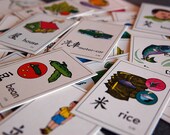
Before you notice - yes, these are in Chinese. I just liked the picture :-)

For those who study best with flashcards - there is a really nice little Java kanji applet by Asahi called Asahi Kanji:

 
It is all but positives, starting from the fact that it's 100% free, and ending at the usefulness of the example words (if only I could get a pound every time I saw a completely unpractical examples for kanji words out there...). Although not the best actual 'study' tool, it enables you to revise/drill the kanji you already know in many ways. More to that - it covers all new levels of JLPT and all the jouyou kanji, making it a nice (and guilt-free) companion during the JLPT preparation panic.

For the iPhone (and iPod Touch, for that matter) users - there is the Asahi Kanji iPhone application, which seems like a lot of fun and is a nice drilling tool before a JLPT exam. I don't see the Android version anywhere, which is a pity - even I could imagine myself playing with it while bored in a bus or a tube (for non-Londoners: the underground). :-)